
Huranga at Dauji Temple
A riot of color, tradition, and laughter at Dauji Temple
Partha Roy
6/22/20252 min read
Mythology :
According to Hindu mythology, Baldeo is the place where Lord Krishna's elder brother, Baldeo, used to rule. He was also known as DauJi Maharaj. Based on his name, the place is known as 'DauJi'. It is situated near about 25 km from Mathura city. According to the Hindu belief, DauJi Maharaj and his boyhood mates used to play pranks by drenching the village girls with water and colors. To protest this, all village girls finally decided to make attacks and strip off the clothing of each boy, including DauJi Maharaj. They try to save themselves from this attack. Women catch one man after the other and show them women's power. Men run and gang up to make strategies to escape.
History:
Somewhere around 1580 AD, one rich family established a temple dedicated to Shri DauJi Maharaj. Holi is celebrated as 'HURANGA' in this temple. Huranga, which means an aggressive form of Holi. All the family members tried to maintain the old rituals of Hindu belief. They act similarly with happy, festive spirits. That is why 'Huranga' is literally special in 'DauJi Temple' compared to the other celebrations.
Till now, the tradition has been carried out by all the village members. Only members from the original family participate in the Huranga, though others are welcome to come and be a witness to this colorful event.
Event:
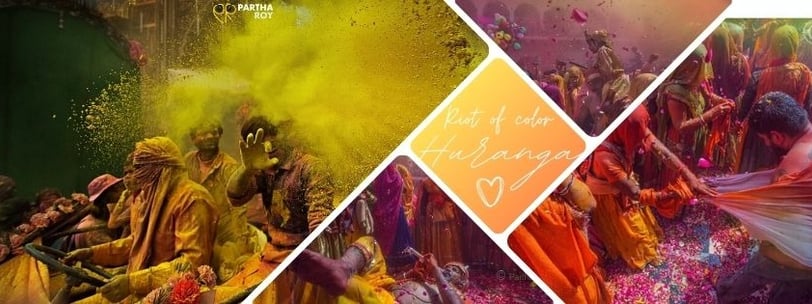
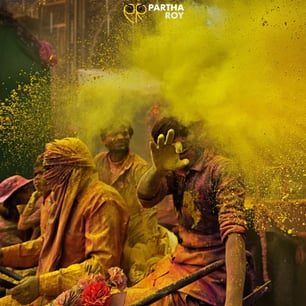
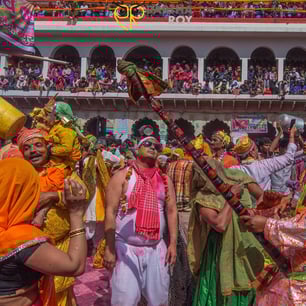
In the heart of Uttar Pradesh, just 25 kilometres from Mathura, lies a celebration unlike any other—a riot of colours, emotions, and timeless tradition known as Huranga. Held at the sacred Dauji Temple, this electrifying spectacle takes place on the day following the main Holi festival, carrying forward the fervour with a rustic and unfiltered charm.
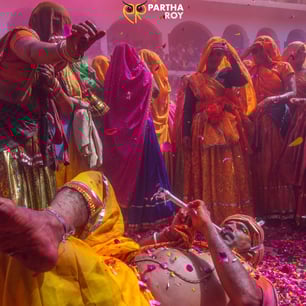
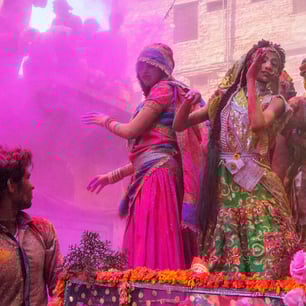
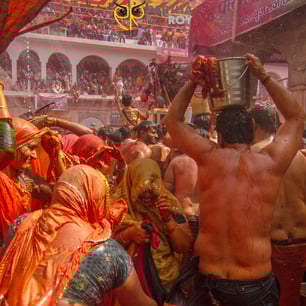
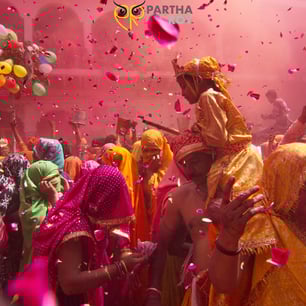
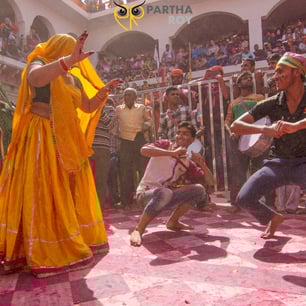
As the sun climbs higher in the spring sky, anticipation simmers outside the temple walls. By noon, the ancient courtyard of Dauji Temple becomes the canvas for a living tradition. Male participants, armed with buckets brimming with colour, pour into the open arena, their laughter echoing off the stone. But they do not hold power for long. Dressed in vibrant saris and traditional finery, the women of the village await, ready to reclaim the day.
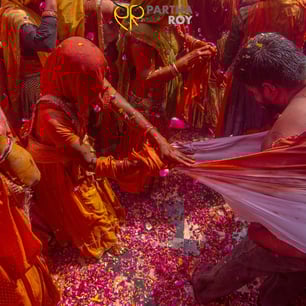
What follows is a playful and symbolic reversal of roles—a celebration of feminine power wrapped in splashes of colour and laughter. The men, having thrown their colours, are swiftly drenched, disarmed, and disrobed of their upper garments. In a spectacle both comic and chaotic, the women use these wet clothes to beat the men in good humour, recreating a scene that is more performance than punishment, more ritual than rivalry.
Date & Time:
The temple gates open at 9:00 AM, allowing visitors to witness the build-up. By 12:30 PM, the action begins—and with it, a surge of energy, tradition, and joy that reverberates through every corner of the courtyard. Drums beat, cheers rise, and powdered hues fill the air like spring breathing through the soil.
How to reach:
If you are planning to witness Huranga firsthand, private vehicles or cabs are your best bet. Public transportation on this holiday is scarce, and the festive surge makes timely access even more vital. Trust your instincts and your GPS—this is a journey worth the effort.
Huranga is not just a festival. It is a glimpse into the soul of rural India, where celebration is not choreographed, but lived. Where laughter is loud, colour is sacred, and tradition dances wildly under the sun.
So come, let yourself go. Stand in the courtyard of Dauji Temple, feel the pulse of heritage, and let the colours of Huranga wash over your spirit.
Partha Roy (March 2018)
Explore
Capturing nature, wildlife, and travel experiences.
Photography
partharoy1779@gmail.com
+91 9831475371
© 2025. All rights reserved.

